South African Wood Preservers Association (SAWPA)
Promoting Timber Treatment and Treated Timber Products

Sapwood and Heartwood | SAWPA
A tree trunk has three main zones; the bark, the sapwood and the heartwood. Trees are basically triangular in shape and they gain height by growing outwards and upwards. At…
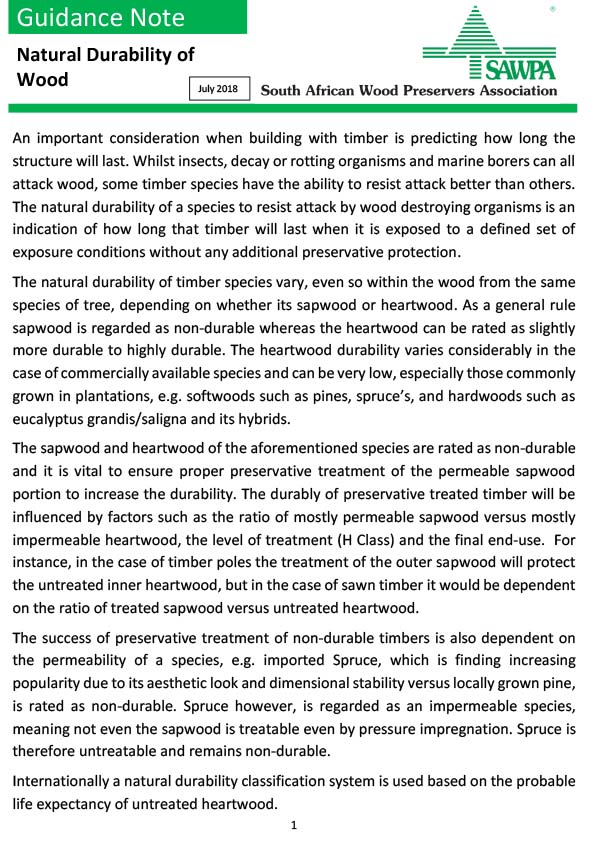
Natural durability of wood | SAWPA
An important consideration when building with timber is predicting how long the structure will last. Whilst insects, decay or rotting organisms and marine borers can all attack wood, some timber…
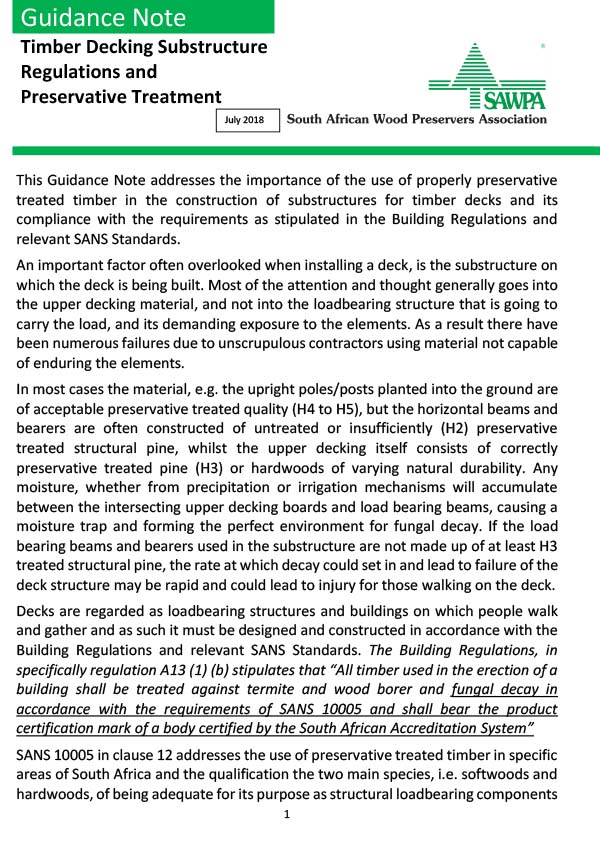
Timber Decking Substructure Regulations and Preservative Treatment
Ensure your timber decking projects are built to last with expert guidance on substructure specification, SANS 10005 standards, and preservative treatments. SAWPA’s note offers practical compliance advice for architects and…
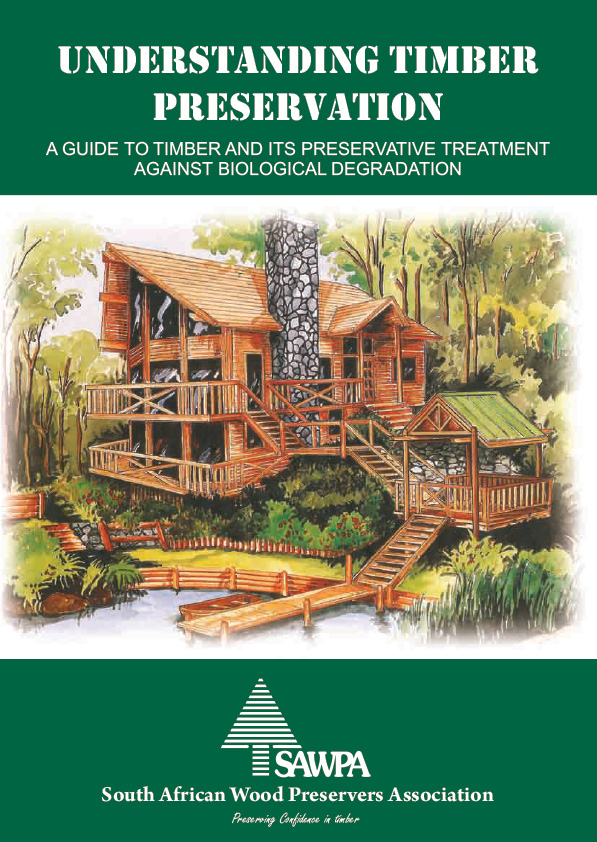
Understanding Timber Preservation – A Complete Guide to Treated Timber in South Africa
Understanding Timber Preservation, a guide to timber and its preservative treatment against biological degradation.
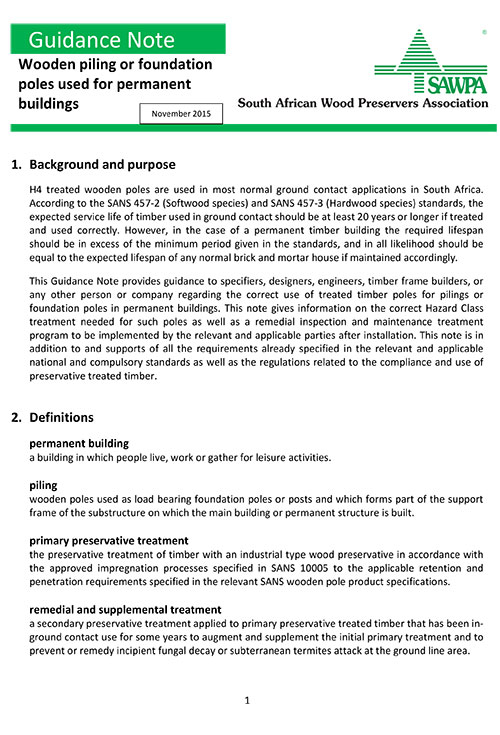
SAWPA Treated Wooden Piling & Foundation Poles | SANS Certified H5 & H6 Preservation | Permanent Building Foundations
This Guidance Note provides guidance to specifiers, designers, engineers, timber frame builders, or any other person or company regarding the correct use of treated timber poles for pilings or foundation…

Wood Preservation Regulations – Interpretation | SAWPA
There are two regulations in South Africa that apply to wood preservation. Both these regulations refer to compliance of SANS 10005, and in order for the reader, end-user, specifier, regulating…

Buying and using preservative-treated timber
Ensure your projects meet South African standards with this guide to buying and using preservative-treated timber. Understand hazard classification, compliance requirements, and proper handling for lasting, durable results—in construction, agriculture,…
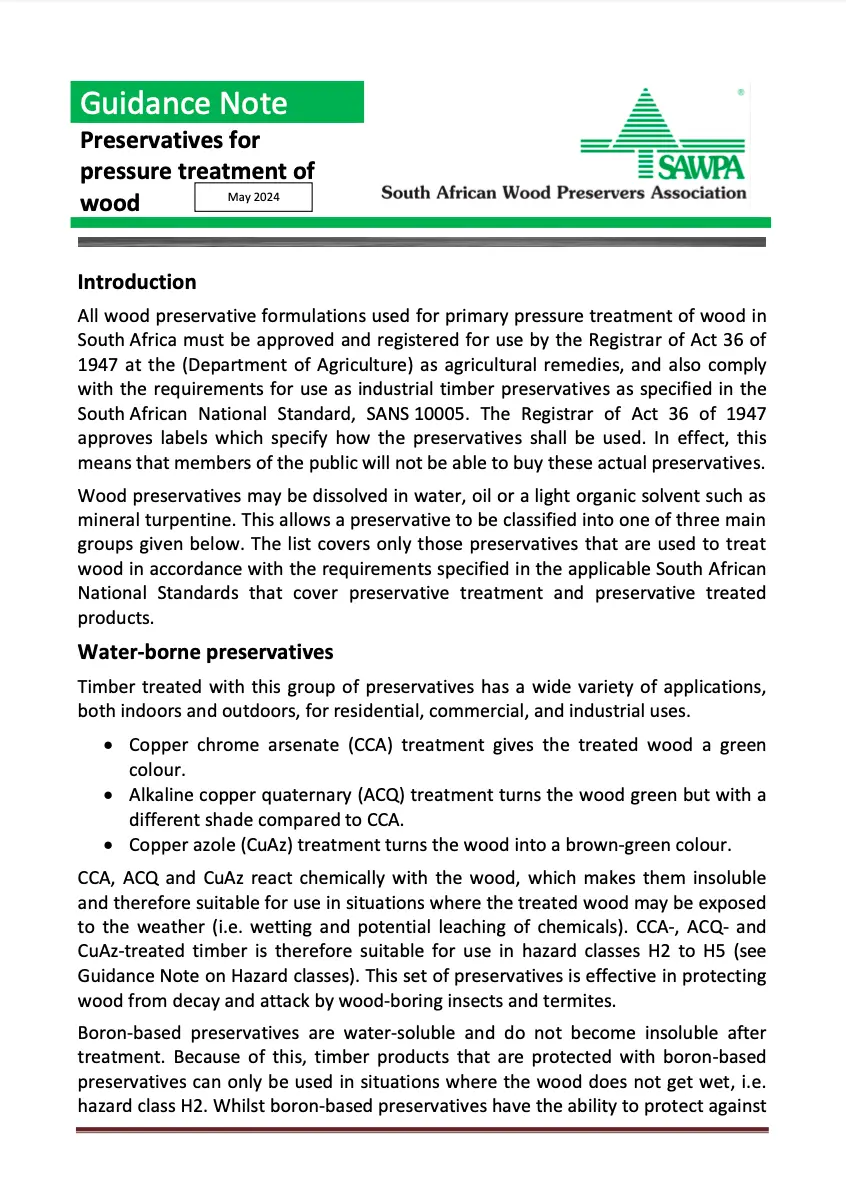
Preservatives for Pressure Treatment of Wood
Our Guidance Note provides comprehensive information on approved wood preservatives in South Africa, categorising them into water-borne, boron-based, oil-borne, and light organic solvent types, ensuring suitability for various applications and…
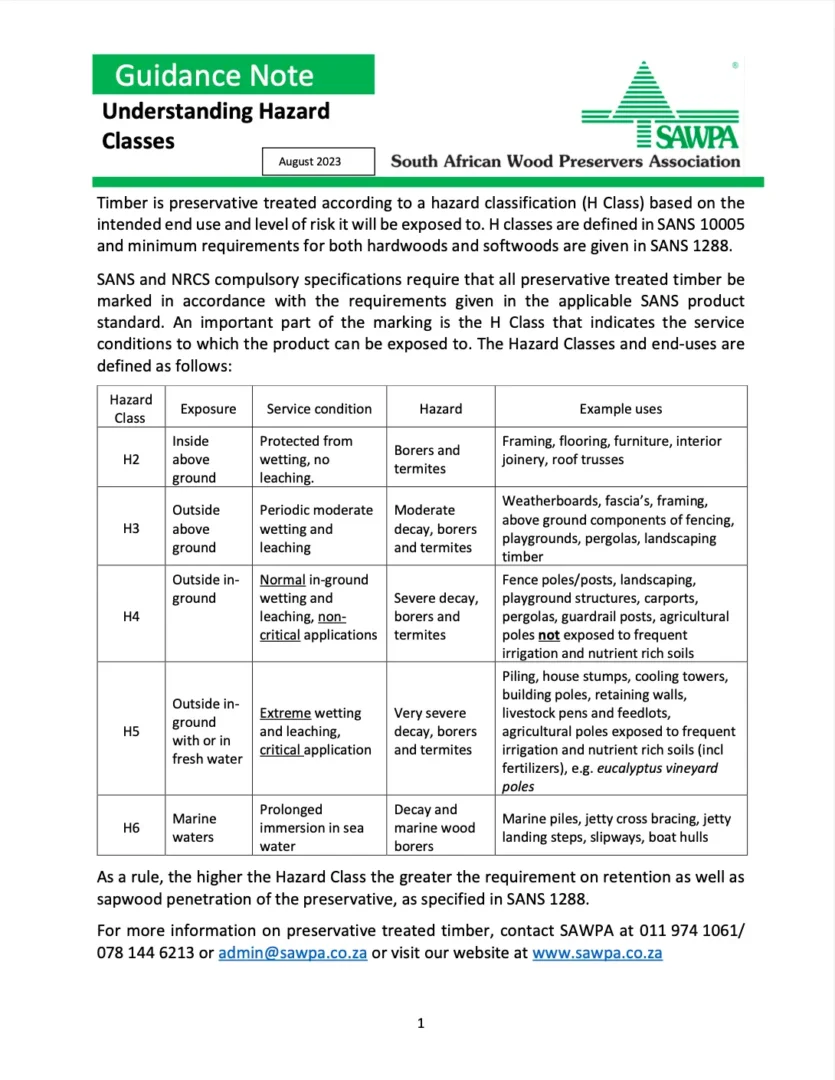
Understanding hazard classes
The “Understanding Hazard Classes” guidance note delineates how timber is treated based on hazard classifications (H Class), with marking requirements outlined in SANS product standards to indicate service conditions and…
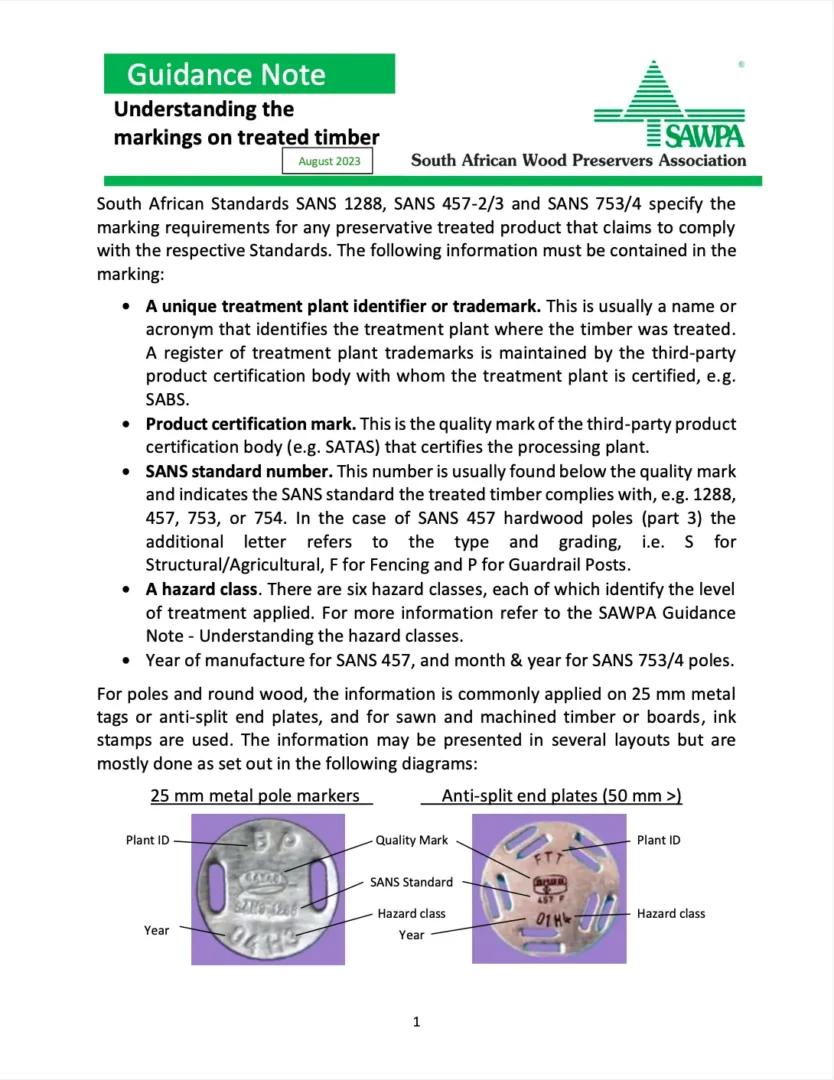
Understanding the markings on treated timber
The guidance note delineates the required markings on treated timber products as per South African Standards SANS 1288, SANS 457-2/3, and SANS 753/4, including unique treatment plant identifiers, product certification…
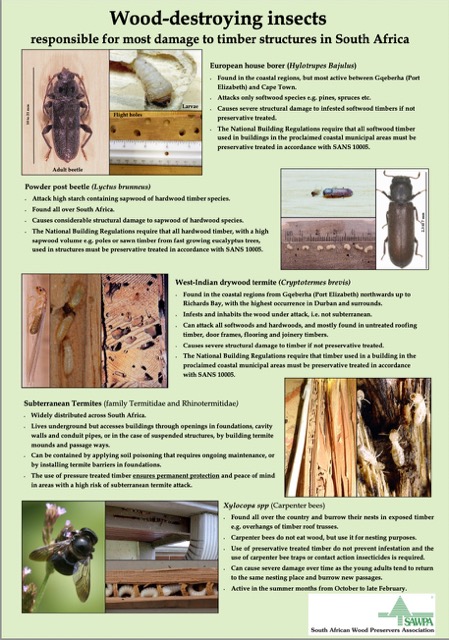
Wood-destroying insects
Wood-destroying insects responsible for most damage to timber structures in South Africa.

Guidance Note Winter poles – Simply a case of appearance
Winter pole is not only found on creosote-treated poles, which normally have a dark brown/black appearance instead of a lighter appearance as can be seen in the above picture. It…
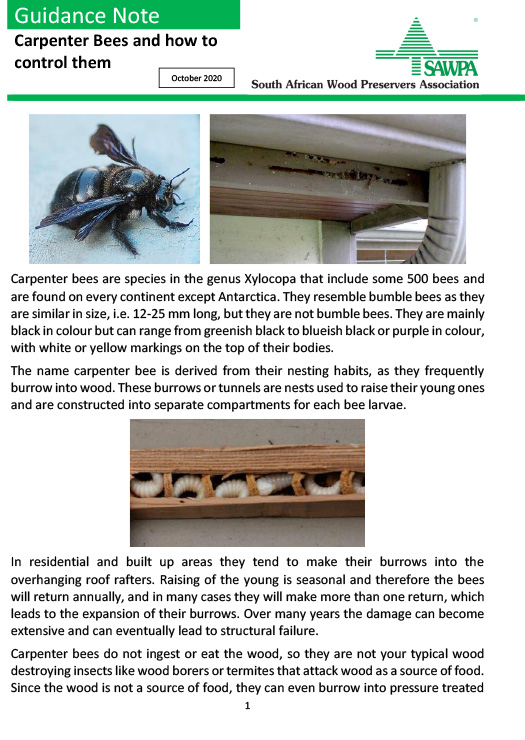
Guidance Note Carpenter Bees and how to control them
Carpenter bees are species in the genus Xylocopa that include some 500 bees and are found on every continent except Antarctica. They resemble bumblebees as they are similar in size,…
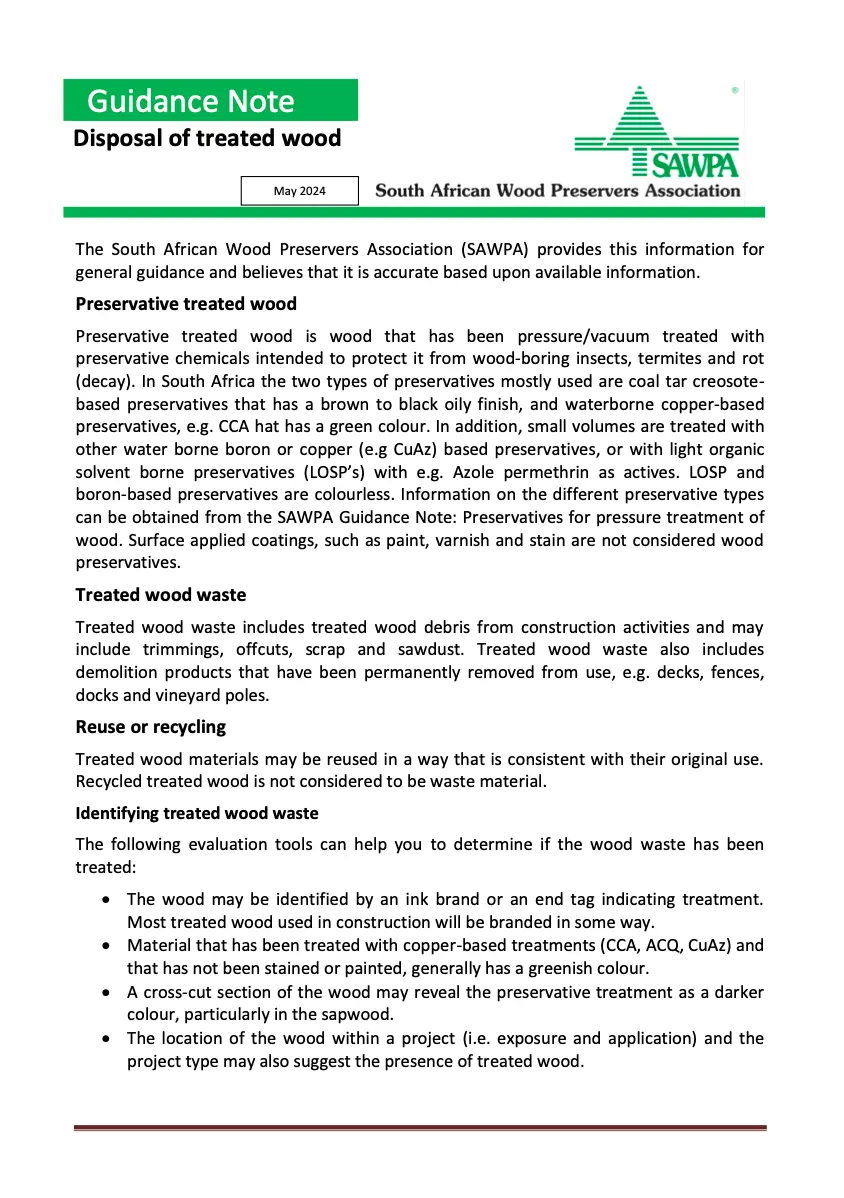
Disposal of Treated Wood
Our guidance note, endorsed by the South African Wood Preservers Association (SAWPA), provides essential information on the responsible disposal of treated wood waste, highlighting identification methods and proper handling procedures…

How to plant a pole
How to plant a pole – guidance note The process of proper preservative treatment of timber requires for the preservative to be deeply impregnated into the permeable or treatable sapwood,…
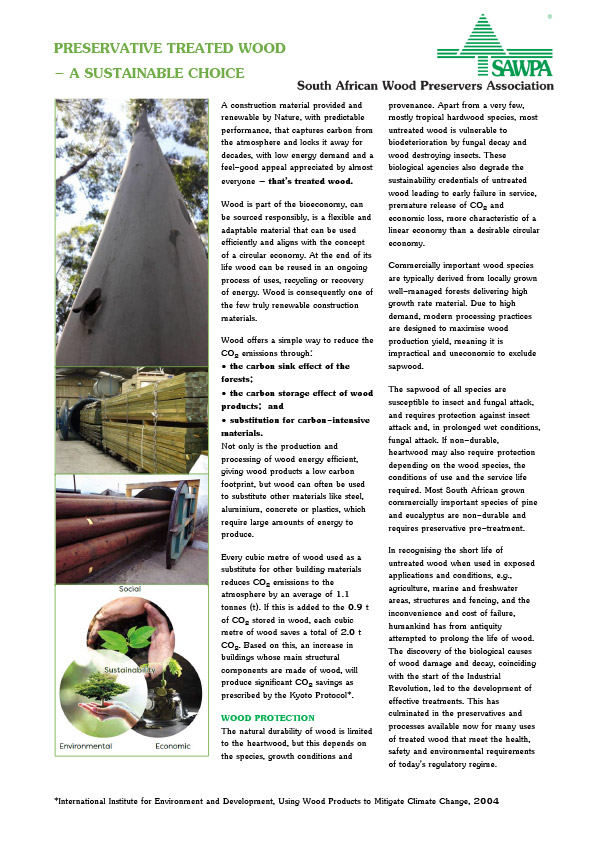
Preservative treated wood – a sustainable choice | SAWPA
Preservative treated wood – the sutainable choice. Wood offers a simple way to reduce the CO2 emissions and carbon storage effect.
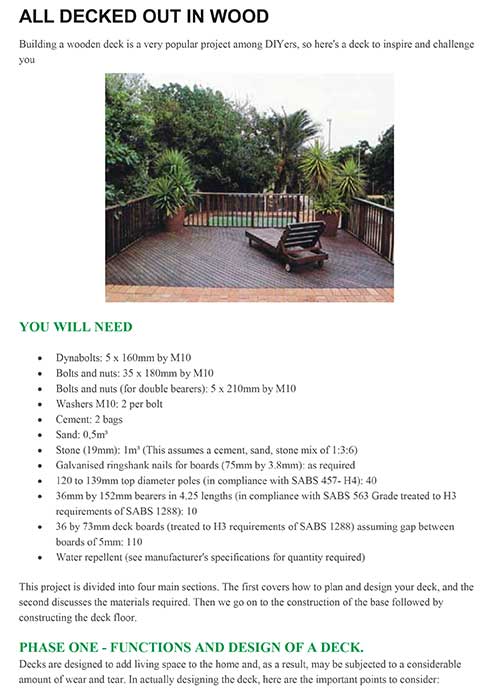
SAWPA | Wooden Deck
Building a wooden deck is a very popular project among DIYers, so here’s a deck to inspire and challenge you.
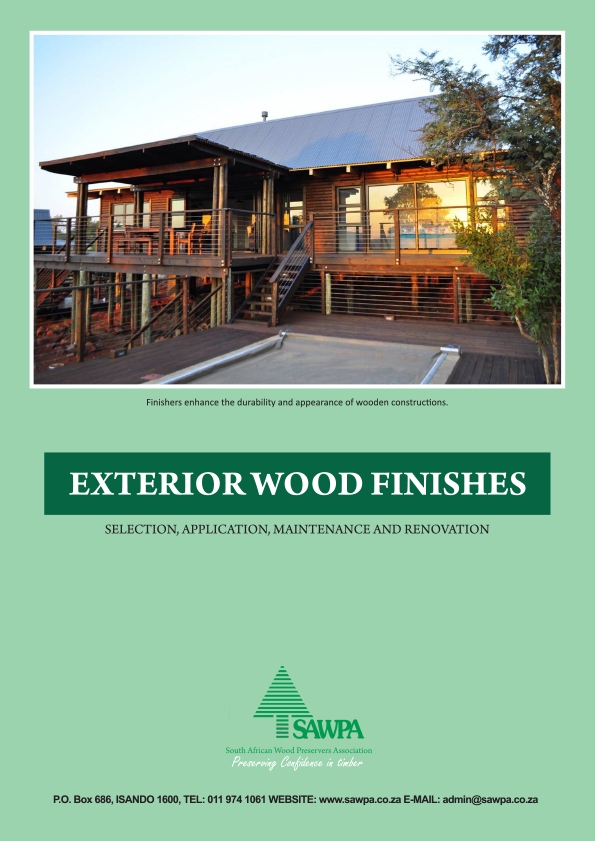
SAWPA | Exterior Wood Finishes: Selection, Application, Maintenance and Renovation
Exterior surface coatings play an important role in the final steps of the manufacture or construction and later, in the maintenance and renovation of wooden objects and structures. The consumer…
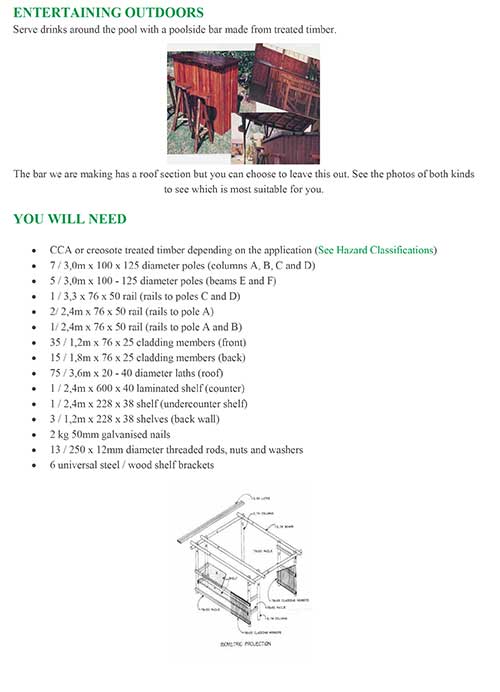
Poolside Bar
Serve drinks around the pool with a poolside bar made from treated timber. The bar we are making has a roof section but you can choose to leave this out.…
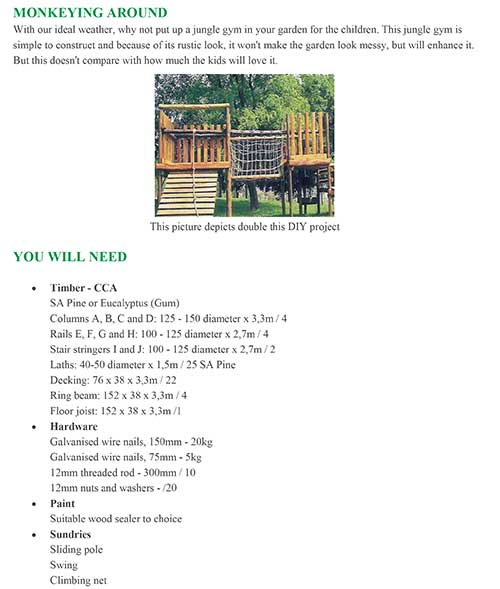
Jungle Gym
With our ideal weather, why not put up a jungle gym in your garden for the children. This jungle gym is simple to construct and because of its rustic look,…
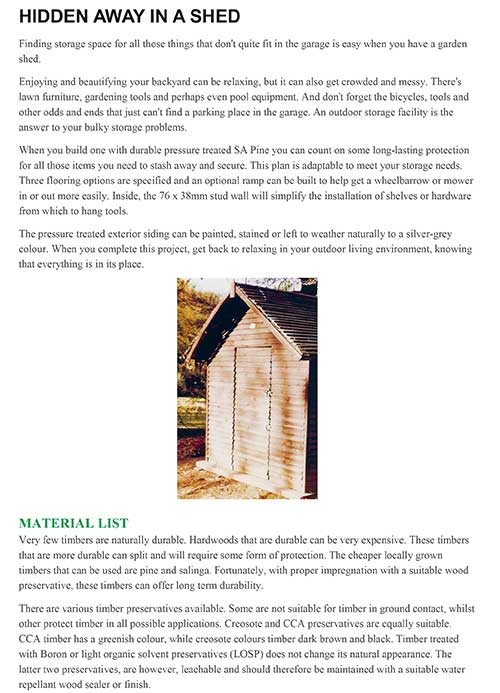
Hidden Away in a Shed
Finding storage space for all those things that don’t quite fit in the garage is easy when you have a garden shed. When you build one with durable pressure treated…
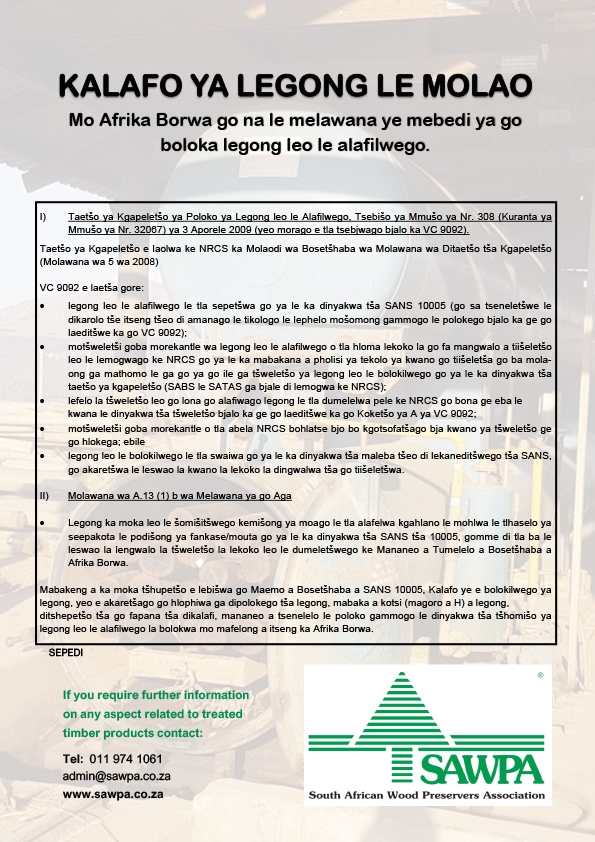
Kalafo Ya Legong Le Molao
Kalafo Ya Legong Le Molao
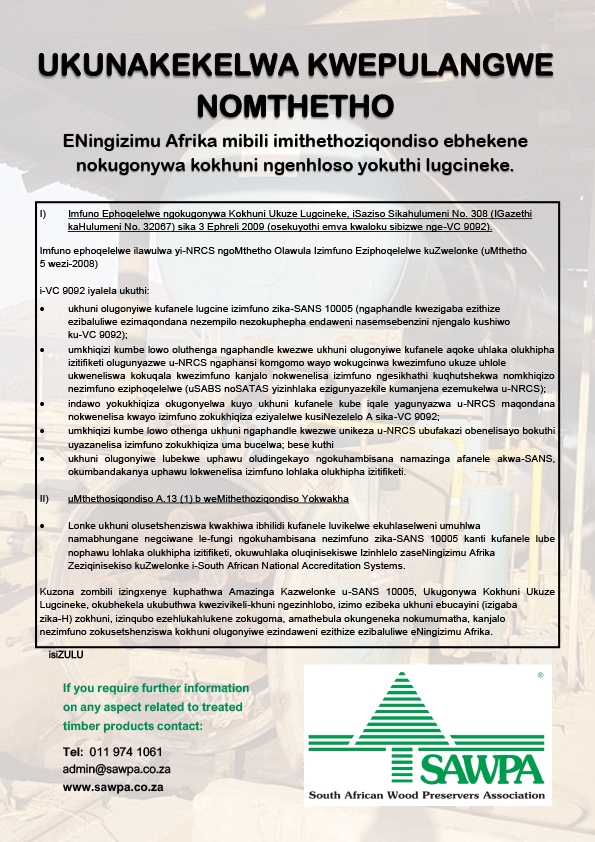
Ukunakekelwa Kwepulangwe Nomthetho
Ukunakekelwa Kwepulangwe Nomthetho
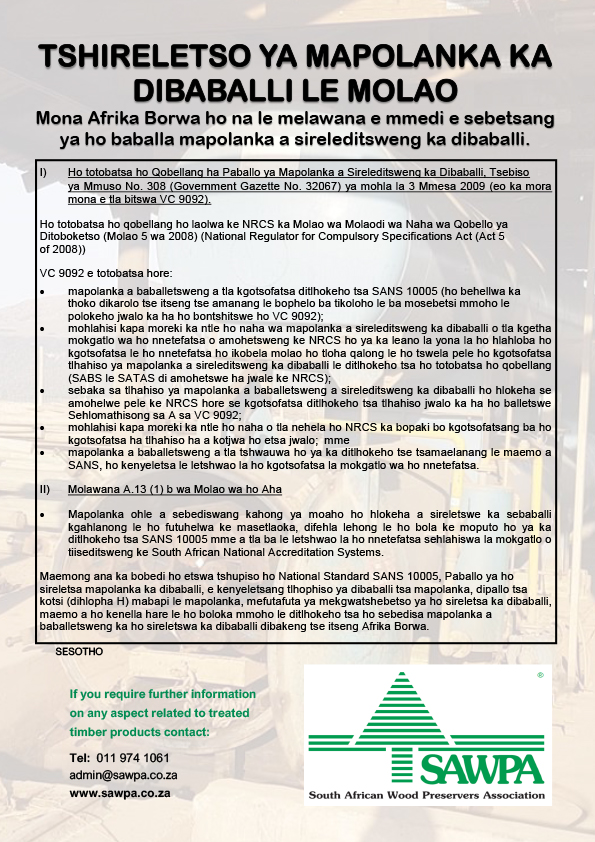
Tshireletso Ya Mapolanka Ka Dibaballi Le Molao
Tshireletso Ya Mapolanka Ka Dibaballi Le Molao
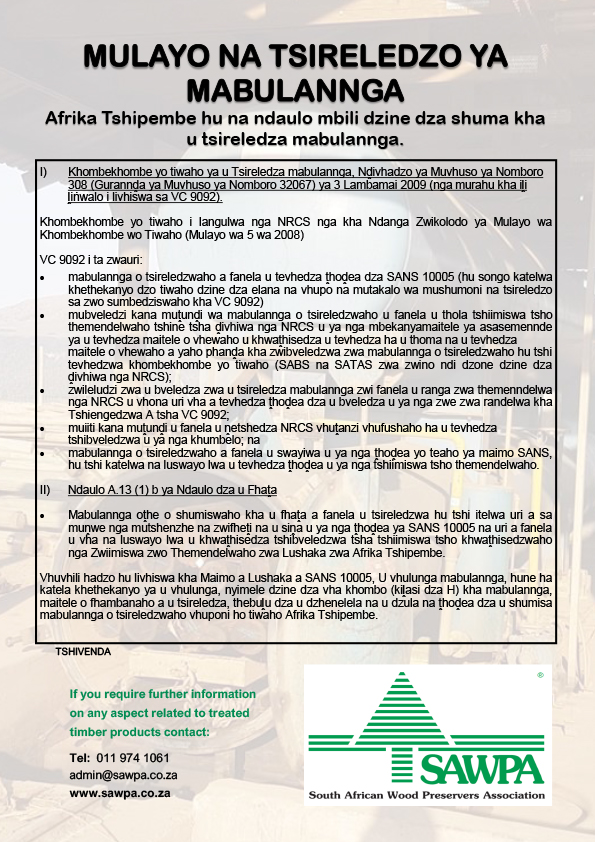
Mulayo Na Tsireledzo Ya Mabulannga
Mulayo Na Tsireledzo Ya Mabulannga
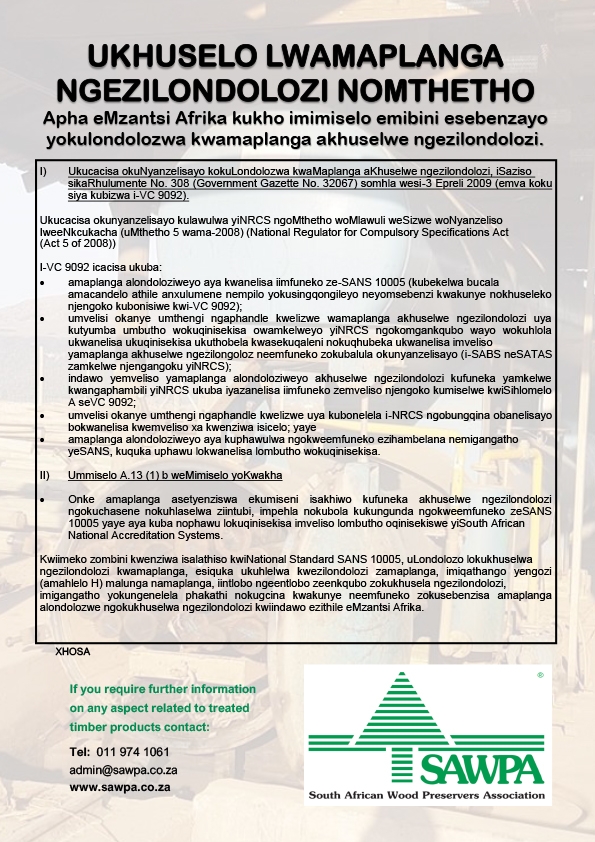
Ukhuselo Lwamaplanga Ngezilondolozi Nomthetho
Ukhuselo Lwamaplanga Ngezilondolozi Nomthetho
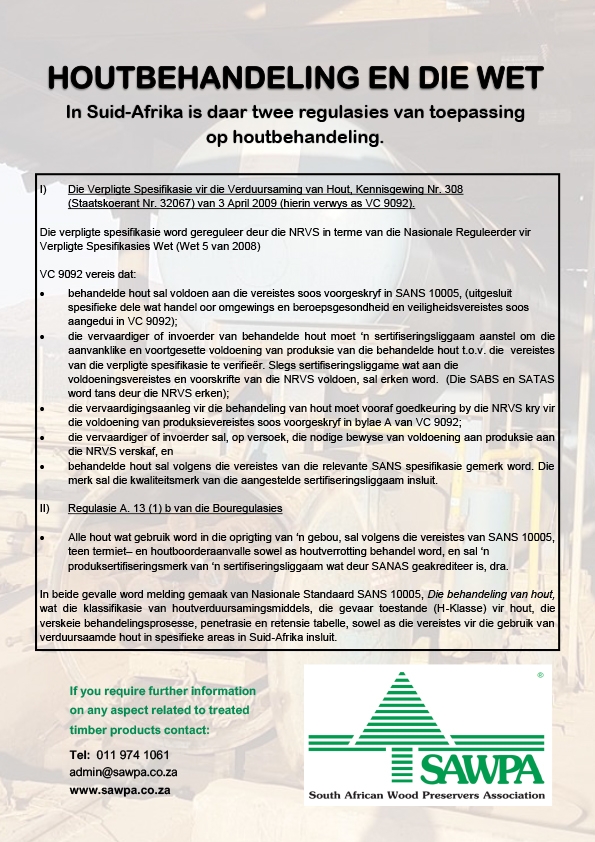
Houtbehandeling en die wet
Houtbehandeling en die wet
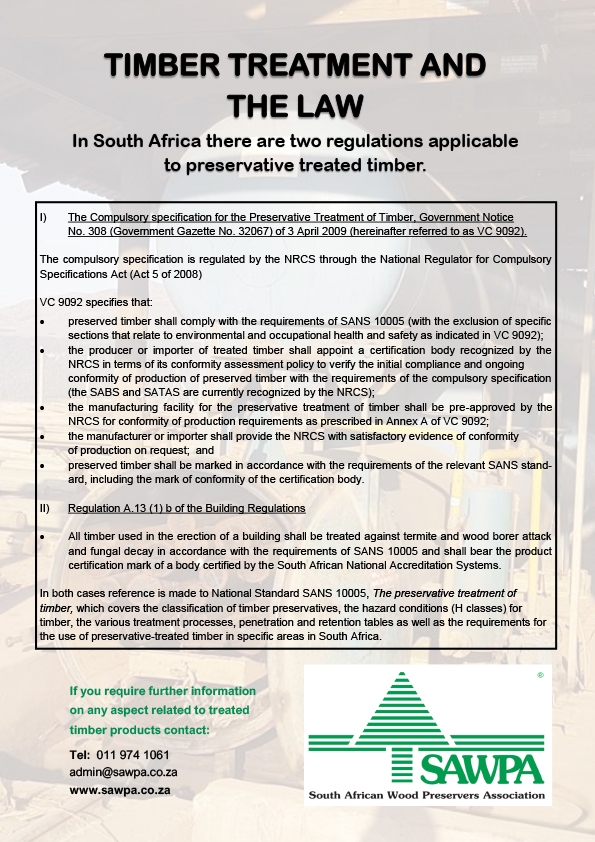
Timber Treatment & the Law
Timber Treatment & the Law In South Africa there are two regulations applicable to preservative-treated timber.
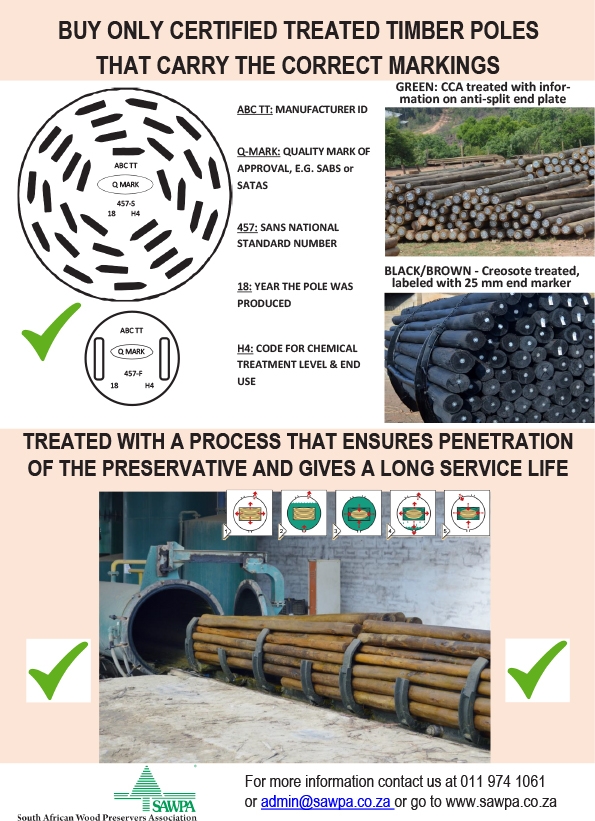
BUY ONLY CERTIFIED TREATED TIMBER POLES THAT CARRY THE CORRECT MARKINGS
BUY ONLY CERTIFIED TREATED TIMBER POLES THAT CARRY THE CORRECT MARKINGS
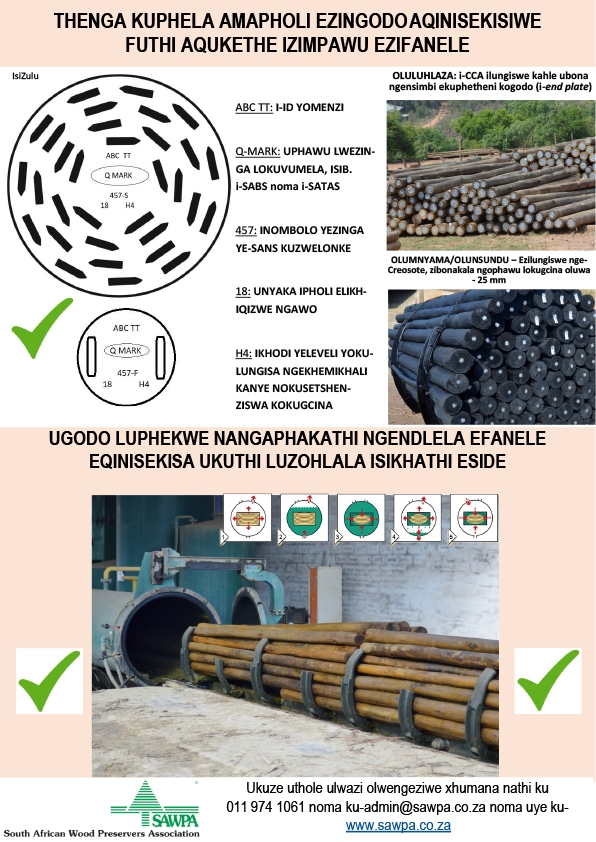
THENGA KUPHELA AMAPHOLI EZINGODOAQINISEKISIWE FUTHI AQUKETHE IZIMPAWU EZIFANELE
THENGA KUPHELA AMAPHOLI EZINGODOAQINISEKISIWE FUTHI AQUKETHE IZIMPAWU EZIFANELE
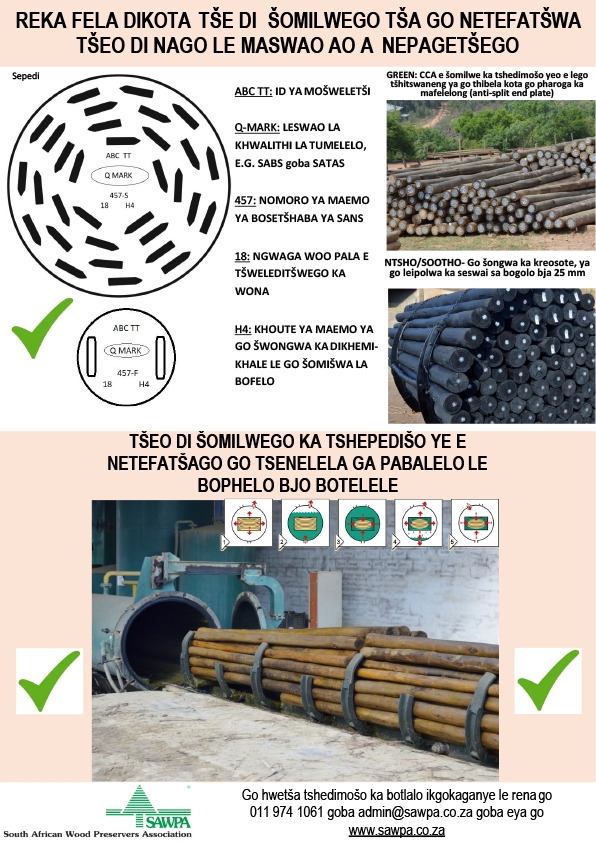
REKA FELA DIKOTA TŠE DI ŠOMILWEGO TŠA GO NETEFATŠWA TŠEO DI NAGO LE MASWAO AO A NEPAGETŠEGO
REKA FELA DIKOTA TŠE DI ŠOMILWEGO TŠA GO NETEFATŠWA TŠEO DI NAGO LE MASWAO AO A NEPAGETŠEGO
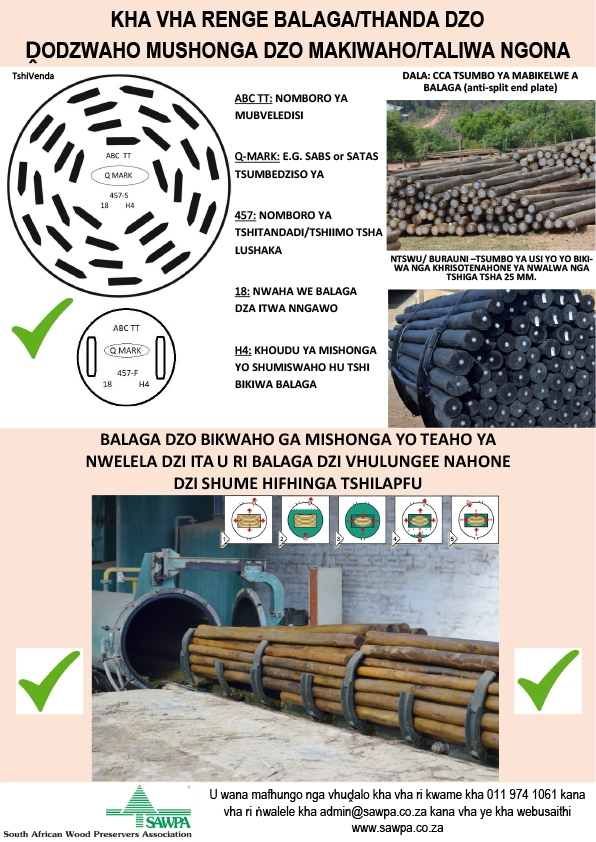
KHA VHA RENGE BALAGA/THANDA DZO ?ODZWAHO MUSHONGA DZO MAKIWAHO/TALIWA NGONA
KHA VHA RENGE BALAGA/THANDA DZO ?ODZWAHO MUSHONGA DZO MAKIWAHO/TALIWA NGONA
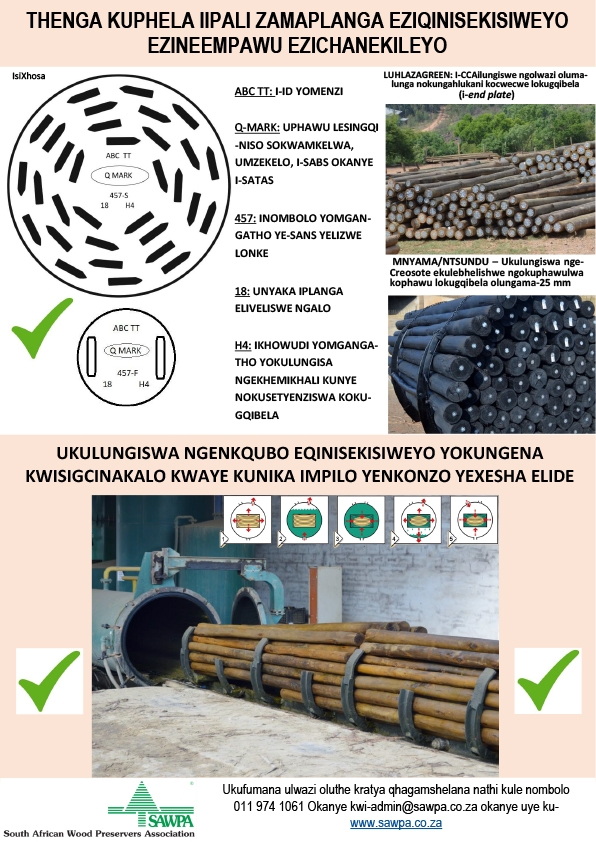
THENGA KUPHELA IIPALI ZAMAPLANGA EZIQINISEKISIWEYO EZINEEMPAWU EZICHANEKILEYO
THENGA KUPHELA IIPALI ZAMAPLANGA EZIQINISEKISIWEYO EZINEEMPAWU EZICHANEKILEYO
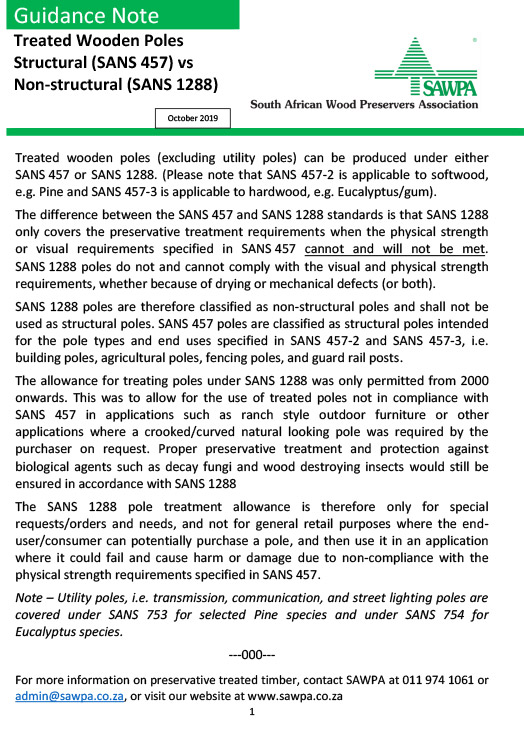
Guidance Note: Treated Wooden Poles
Treated wooden poles (excluding utility poles) can be produced under either SANS 457 or SANS 1288.
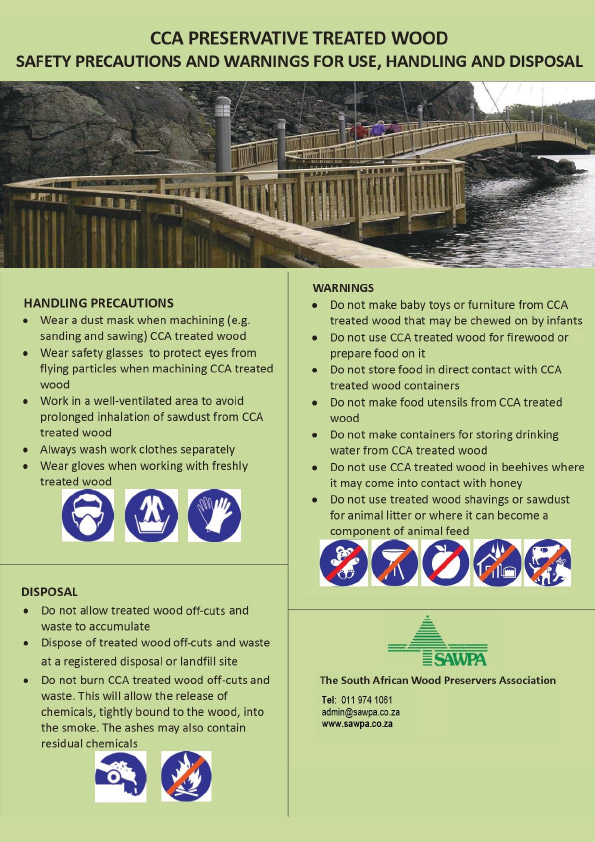
CCA (Copper Chrome Arsenate) Preservative Treated Wood
CCA Preservative Treated Wood SAWPA SAFETY PRECAUTIONS AND WARNINGS FOR USE, HANDLING AND DISPOSAL
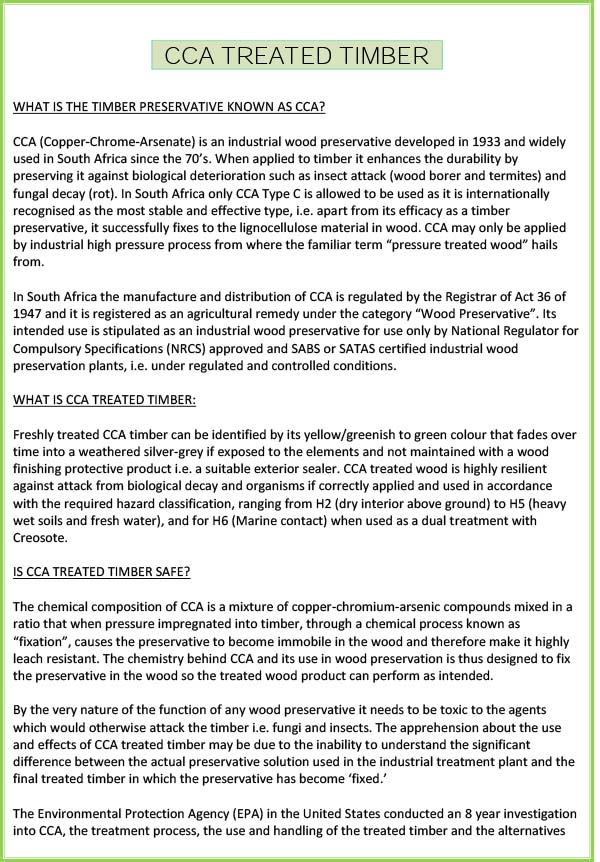
CCA Treated Timber
CCA (Copper-Chrome-Arsenate) is an industrial wood preservative and is widely used in South Africa. When applied to timber it enhances the durability by preserving it against biological deterioration such as…